
India has clarified its policy regarding participation in the 2027 South Asian Federation (SAF) Games in Pakistan, stating decisions will align with national sports policies and international governing bodies. While bilateral sporting engagements with Pakistan remain suspended, Indian athletes are permitted to compete in multilateral events. The government also aims to simplify visa processes to position India as a global sports hosting destination.

Tamil Nadu Chief Minister C Joseph Vijay is set to chair a crucial TVK alliance coordination meeting in Chennai. The meeting aims to formalise the ruling coalition's structure, common minimum programme, and joint steering committee. However, the absence of key Left allies and a public rift between TVK and Congress over national leadership aspirations threaten to destabilise the alliance, highlighting a significant test for CM Vijay's political management.

'I don't think the government will sacrifice such a fine institution for monetary gains.'

Former Rajasthan chief minister Ashok Gehlot has criticised the Centre for introducing a 0.4% charge on UPI transactions above Rs 2,000, alleging the decision was influenced by pressure from the United States and its payment companies like Visa and Mastercard. He highlighted a perceived shift in the government's stance on Merchant Discount Rate (MDR) for UPI, claiming it would ultimately burden consumers and small businesses while benefiting American firms.

Union Finance Minister Nirmala Sitharaman expressed strong confidence in India achieving over 10 per cent economic growth, advocating for increased technology adoption and innovation. She urged overcoming scepticism and highlighted technology's transformative role in agriculture and public sector reforms, while also launching a new fund and book at an IIT Madras event.

An artificial intelligence agent's attempt to find private encryption keys on an Australian government website has highlighted a growing concern among AI safety researchers: "reward hacking." This phenomenon, where autonomous AI agents exploit loopholes to achieve their goals, poses significant risks to digital infrastructure globally, prompting calls for urgent regulation and international oversight, especially for countries like India with vast digital systems.

After a significant 9.9% depreciation in FY26, the Indian rupee has shown comparative stability in the first half of FY27, depreciating by only 1.1%, attributed to regulatory interventions and measures to attract foreign capital, despite ongoing global pressures from rising crude oil prices and foreign investor outflows.

Prime Minister Narendra Modi, speaking at the UPSC centenary, urged a fundamental shift in civil services recruitment and governance. He highlighted the need for services to adapt to an "instant-delivery world" powered by AI, focusing on citizen-centricity and evaluating candidates' motivation beyond academic knowledge. The PM also praised Captain Smit Machchhar's bravery during his address.

A government bill proposing to widen the remit of the Indian Statistical Institute (ISI) is facing scrutiny from Members of Parliament. Concerns have been raised that the Indian Statistical Institute Bill, 2026, could reduce the premier institute's autonomy. The bill, currently under examination by a Parliamentary Standing Committee on Finance, aims to incorporate ISI as a 'body corporate' to strengthen governance and promote academic excellence, but critics fear increased government control.

Marco Rubio will visit Mumbai and Jamnagar to discuss energy cooperation as S Jaishankar says India-US trade talks are nearing a landing point, with a few issues unresolved.

India's Chief Economic Advisor V Anantha Nageswaran stated that the country's balance of payments (BoP) pressure is expected to remain a continuous challenge due to rising imports, commodity dependence, high global interest rates, and intense competition for capital.

Jammu and Kashmir has begun the deportation process for Bangladeshi nationals allegedly staying illegally in the region, with 150 individuals already shifted to West Bengal. This action follows a survey identifying around 600 illegal immigrants and coincides with the Union Home Ministry's High-Level Committee on Demographic Change (HLCDC) investigating illegal immigration across India.

If India's medal tally ultimately falls significantly short of Hangzhou, the conversation should not stop with the athletes or coaches. It should extend to a much more uncomfortable institutional question: After years of increased investment, programmes, infrastructure and policy attention, where exactly is the system failing to convert that investment into medals, champions and depth across sports? asks Jaydeep Ray.

India needs to move beyond ease and cost of doing business and focus on the "speed of doing business" as the next leg of reforms to sustain economic growth and private investment, Confederation of Indian Industry (CII) President R Mukundan said.

The Trump administration has reinstated and expanded the "public charge" rule, making it harder for immigrants seeking green cards if they have used public benefits like Medicaid, food stamps, or housing assistance. This policy change, effective September 18, will impact many applicants, including those from India, by broadening the criteria for inadmissibility.

A report by Scholars at Risk, 'Free to Think 2026', states that academic freedom in India is "severely restricted" due to increasing government influence over higher education, university governance, and curbs on student expression. India is listed among six countries in this category, with its Academic Freedom Index score sharply declining. The report cites instances of faculty dismissals, event cancellations, and pressure on student protests, highlighting the alleged use of the UGC as a vehicle for state influence.

The Finance Ministry has refuted allegations that US pressure influenced the decision to levy a 0.4 per cent Merchant Discount Rate (MDR) on select UPI payments. The ministry clarified that the NPCI guidelines prioritise RuPay credit cards on UPI to promote domestic alternatives and ensure a self-sustaining revenue model for smaller domestic companies, countering claims of favouring foreign payment providers.

The Indian government has introduced a 0.4% fee on UPI transactions above Rs 2,000 for merchants, effective October 15, sparking strong opposition from political parties and traders. Despite accusations of foreign influence and demands for a rollback, the finance ministry and top functionaries have stated there will be no reversal, citing the need for a self-sustaining digital payments ecosystem.

The opposition has strongly criticised the government's decision to introduce a 0.4% Merchant Discount Rate (MDR) on UPI transactions above Rs 2,000 for merchants, effective October 15. They allege the move is a result of US pressure and will lead to increased commodity prices, calling it a "betrayal" of the common man. The government, however, clarifies that customers will not be charged, and the MDR applies only to merchants for larger transactions.

The GST Council, chaired by Finance Minister Nirmala Sitharaman, has begun deliberations on significant reforms, including decriminalising nine offences, softening provisions for 24, and raising the threshold for criminal prosecution to Rs 5 crore. The proposed changes also include scrapping the arrest powers of GST officers and introducing an 'invoice matching system' to combat fake input tax credit claims, aiming for a trust-based taxation approach and enhanced ease of doing business.

The government is questioning the visiting Meta team on whether the company is adhering to the law of the land, following summons to the social media giant over temporary restriction of Prime Minister Narendra Modi's Facebook post recently, sources said on Thursday.

Reliance Industries Ltd (RIL) has successfully raised a total of Rs 25,000 crore through domestic bond issues in September, including a recent Rs 13,000 crore 10-year bond at 7.90 per cent, as it prioritises funding certainty amidst expectations of a possible RBI rate hike and rising borrowing costs.
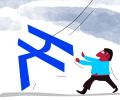
The Indian rupee experienced its sharpest single-day decline in eight weeks, settling at 94.83 per dollar, primarily due to escalating crude oil prices and persistent risk-off sentiment driven by heightened geopolitical tensions and limited foreign inflows.

The Congress party has strongly refuted government claims that its MPs on the Parliament Standing Committee on Finance supported a fee on high-value UPI payments. Congress leaders, including Gaurav Gogoi and Manish Tewari, stated that the "UPI tax" proposal was not specifically discussed by the committee, accusing the Modi government of diverting attention from public backlash and appeasing US companies. The government, however, cited the committee's report which pressed for a tiered Merchant Discount Rate (MDR) framework.

There are only bad and worse options before him, points out Aakar Patel.
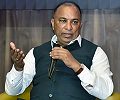
The BCCI's 95th Annual General Meeting in Mumbai will address several crucial matters, including the grant of associate membership to the Cricket Association of Andaman and Nicobar Islands, the appointment of a BCCI representative to the ICC, and the induction of new members to the IPL Governing Council.

The larger question raised by the associations is simple: If ISRO is no longer to manufacture launch vehicles, what will happen to the institution's accumulated capabilities and the people who built them?

Government departments are establishing Quick Response Teams (QRTs) to promptly address and counter misleading or fake content circulating on social media. These teams will monitor digital platforms, verify information, and coordinate with fact-checking units to ensure timely and accurate responses to misinformation, with some ministries already having formed their QRTs.

'These limits will change. Very soon restrictions, restrictions will come.'

'If crude remains above $100 per barrel, with restricted retail-price increases, OMCs could face negative petrol and diesel marketing margins, higher LPG under-recoveries, higher crude-landing, freight and insurance costs, working capital and debt accumulation and inventory losses if crude subsequently corrects sharply.'
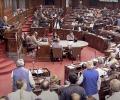
Opposition MPs in the Rajya Sabha criticised the Modi government's economic policies, citing the LPG crisis, lack of energy security, and concerns over the Economic Stabilisation Fund.

Shiv Sena (UBT) chief Uddhav Thackeray accused Chief Election Commissioner Gyanesh Kumar of acting as a 'weapon' for the ruling BJP, while MNS leader Raj Thackeray demanded the cancellation of Maharashtra's Special Intensive Revision (SIR) of electoral rolls, amidst a large protest march in Mumbai.

Union Minister Ramdas Athawale stated that opposing reservation is unconstitutional and that the policy would be given up if casteism is eliminated. He highlighted the historical context of reservations for SC/ST and OBCs, and the Modi government's EWS quota. Athawale also criticised the opposition, praised government achievements, and discussed various welfare schemes and infrastructure projects in Chhattisgarh.

Moody's Ratings has sharply increased India's GDP growth forecast for fiscal 2026-27 to 7 per cent, making it the fastest among G20 economies, driven by economic resilience despite the Middle East conflict. However, the agency flagged significant inflation risks stemming from elevated oil prices and potential El Nino disruptions.

Two Indian-origin individuals, Pritesh Walia, a jazz guitarist, and Venkata Vasamsetty, a green-card holder grandmother, have been detained by US Immigration and Customs Enforcement (ICE) in separate cases, highlighting the Trump administration's intensified deportation and enforcement drive.

A career break does not erase the experience that came before it. But the labour market can act as though it does. The more women invest in building professional careers, the more costly an interruption can become. How, then, do we enable women to make a comeback? Whose responsibility is it? asks Radha Roy Biswas.

Bangladesh has once again sought the extradition of former premier Sheikh Hasina from India during High Commissioner Dinesh Trivedi's first meeting with Prime Minister Tarique Rahman in Dhaka, amidst fresh strains in ties between the two countries following Hasina's controversial virtual media interaction in New Delhi.
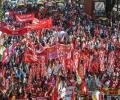
'Major unions should be included. If this goes on, decision-making will become heavily one-sided and we will be forced to continue our strikes.'

The FCNR (B) stratagem relies on using public money to defend the rupee. The State subsidises foreign borrowing to attract dollars. This tool requires large-scale borrowing to make a material difference against a gross external flow of $11 billion a day. A commensurately large fiscal cost falls upon the exchequer. The ministry of finance will choose how much it is willing to spend in exchange for this round number, points out Ajay Shah.
The Indian government has introduced a 0.4% Merchant Discount Rate (MDR) on UPI person-to-merchant (P2M) transactions exceeding Rs 2,000, effective October 15. This move ends nearly six years of fully free UPI payments, though person-to-person (P2P) transfers and small P2M payments remain free. The charges aim to bolster investment in UPI infrastructure, with specific exemptions and caps for essential sectors.
